17 Mar 2026
New charter launched to improve police and media relations
Significant milestone in reset of relationship between policing and the media.
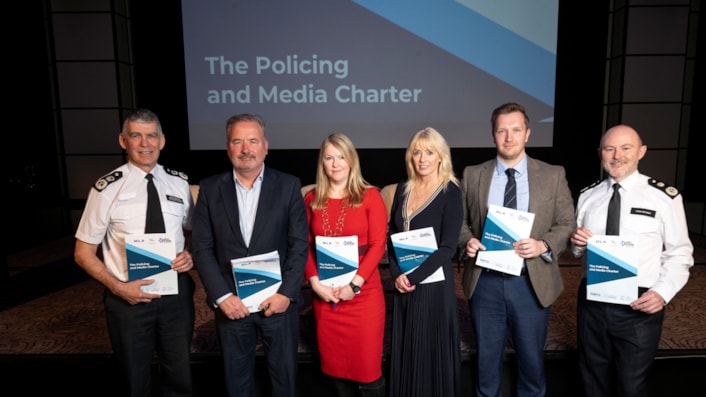
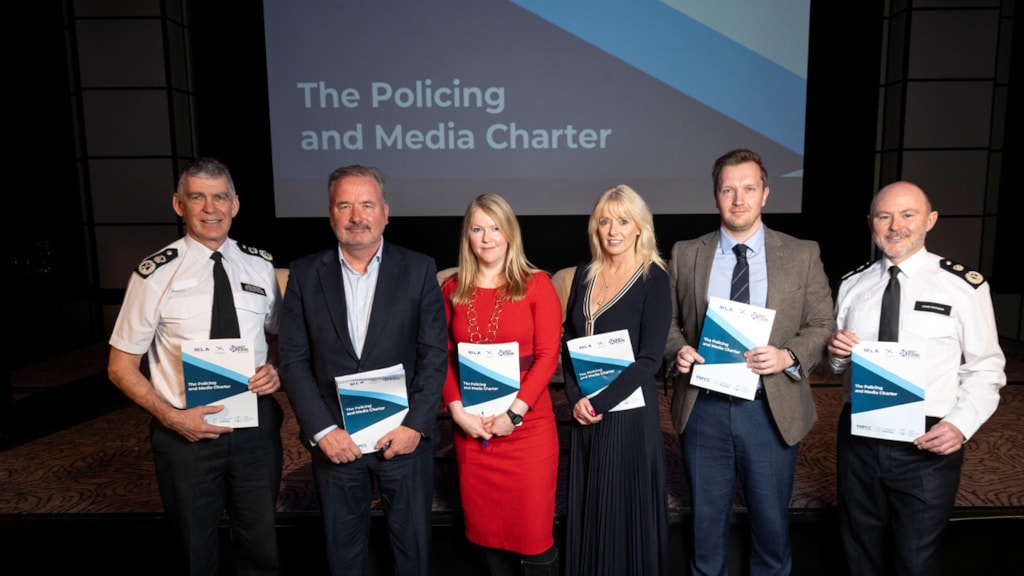
The launch of the ground-breaking ‘Policing and Media Charter’ marks a significant milestone in the biggest reset of the relationship between policing and the media in decades.
It is the result of over two years of collaborative work between senior leaders from policing, the criminal justice sector and the media.
The charter is the first product designed for both policing and journalists to use, setting shared principles, standards and expectations that will create national consistency.
It has been launched today, Tuesday, March 17, at the Society of Editors’ ‘Future of News’ conference in London.
Jointly developed by the National Police Chiefs’ Council (NPCC), College of Policing, Crown Prosecution Service (CPS), Crime Reporters Association (CRA), Society of Editors and Media Lawyers Association (MLA), the charter sets out clear guidance to both police force communication teams and journalists to help them work more effectively together.
The charter is one of three products developed by a national working group that was established in late 2023 following the publication of the College of Policing’s independent review into the Nicola Bulley missing person investigation, which attracted unprecedented levels of mainstream and social media interest.
A recommendation in the review proposed that the relationship between policing and the media should be rebuilt.
The national working group has also overseen publication of:
- An updated College of Policing Media and Communications Authorised Professional Practice (APP), which sets out guidance for police forces around the release of information to the public.
- An updated Crown Prosecution Services (CPS) Joint Media Protocol, which sets out clear guidance on how journalist requests for prosecution material used in open court will be managed.
Chief Constable Gavin Stephens, Chair of the NPCC, said:
“Policing needs open and honest communication with the public, and the media has a central role to play in this, especially in fast-moving or sensitive situations.
“This ground-breaking charter represents the willingness of policing and the media to come together to build mutual trust and bring about meaningful change in how we work together.
“It will form the backbone of stronger relationships between police forces and media organisations across the country, and I’d like to thank everyone who contributed to the vital discussions, debate and disagreements that shaped it.”
Contained as an annexe in the charter are the recommendations to policing that were proposed by the CRA, Society of Editors and MLA in a report published in 2024.
Almost all of these recommendations have now been accepted by policing.
Chief Constable Sir Andy Marsh, College of Policing CEO, said:
"This is a landmark moment for the relationship between police and the media which will give the public confidence that what they are hearing is accurate and verified.
“The media plays a vital role in our work, including publicising our urgent appeals to the public, scrutinising our decisions and holding us to account.
“We have published robust new standards for policing communications to combat a climate of mis and disinformation which is harming communities.
“The work that has been achieved by the media and policing is testament to our shared value of working in the public interest.”
Stephen Parkinson, Director of Public Prosecutions at the Crown Prosecution Service, said:
“Open justice is a fundamental principle of our legal system but how we uphold it must keep pace with the modern world.
“This Charter is another important step in strengthening how prosecutors work with policing and the media to build public understanding and confidence in the criminal justice system.
“It will work alongside the Joint Media Protocol, which sets out clear guidance on how prosecution material used in open court can be shared to support accurate and responsible reporting while safeguarding the rights of victims, witnesses and their families.”
Dawn Alford, Chief Executive of the Society of Editors, said:
“The relationship between journalists and the police is central to ensuring the public receives accurate and timely information about crime and policing.
“This charter represents a genuine effort from both policing and the media to rebuild trust and improve the way we work together in the public interest.
“When information flows well between policing and professional journalists, the public benefits. This charter is an important step towards strengthening that cooperation.”
Rebecca Camber, Chair of the Crime Reporters Association added:
“This charter has the potential to fundamentally transform the relationship between police and the media, which remains essential to public confidence and policing legitimacy in the UK.
“Two years ago, the Crime Reporters Association made a series of recommendations kickstarting a vital conversation between policing and the media about rebuilding trust.
“I’m delighted that police have listened and together we have produced a groundbreaking charter which I hope will make a real difference to journalists, police and press officers everywhere.”
Read the charter here: a4-policing-media-charter-_v2-1.pdf
Contact information
Communications office
By phone: 0800 538 5058
By email: press.office@npcc.police.uk